A round table on the prospects for the modern Olympiad movement development
12.07.2026
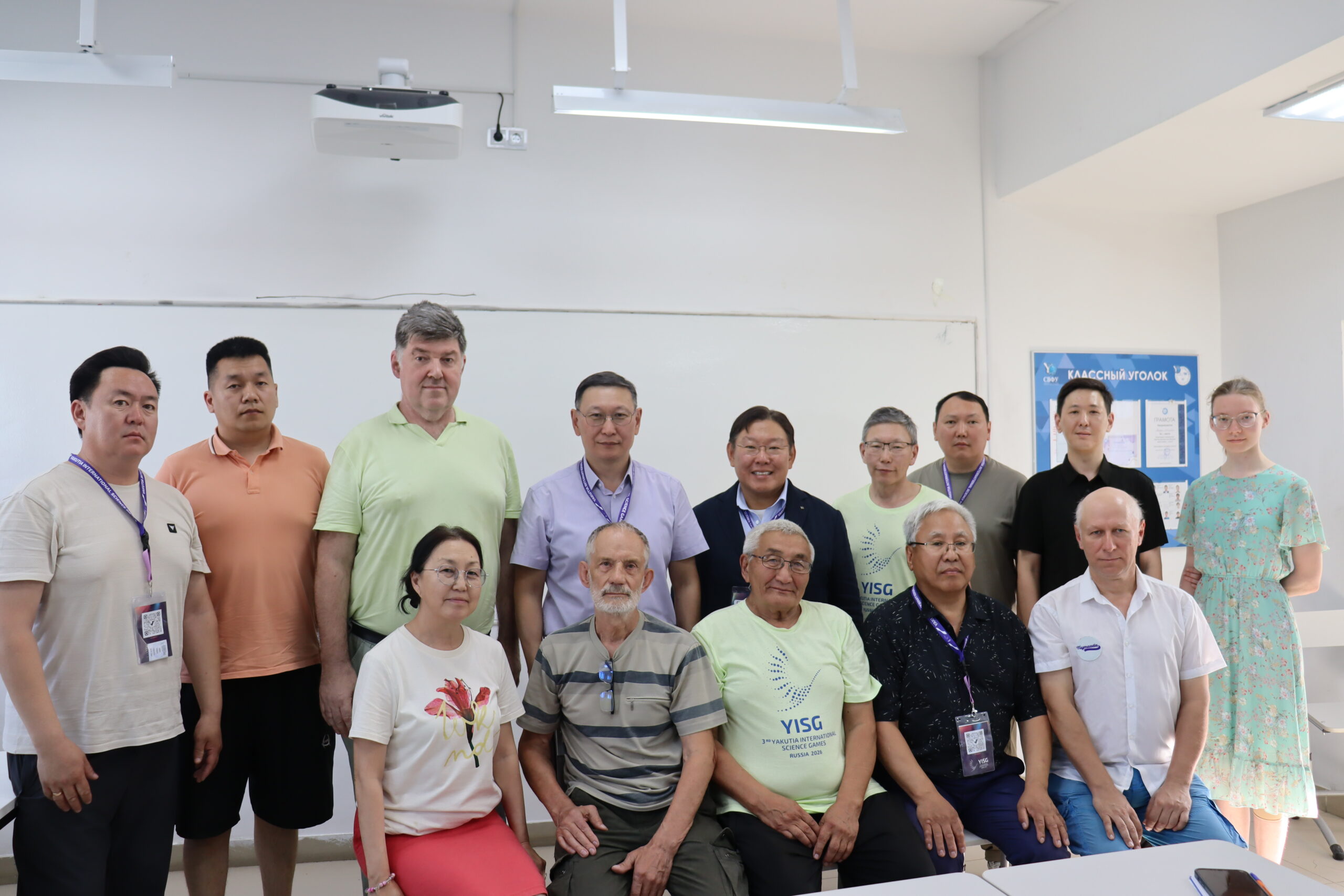
A roundtable discussion, “The Modern Olympiad Movement: Problems and Prospects,” was held as part of the III International Science Games. It brought together Olympiad organizers, jury members, representatives of educational organizations, and the expert community of the M.A. Alekseev International School Olympiad “Tuymaada”. Participants discussed current issues related to the development of the Olympiad movement, improvement of the quality of intellectual competitions, and expanding of international cooperation.
The Tuymaada International Olympiad has been held annually since 1994 in four subjects: mathematics, physics, chemistry, and computer science. Its initiator was M.E. Nikolaev, First President of the Republic of Sakha (Yakutia). The Olympiad was named after Honored Teacher of the USSR Mikhail Alekseevich Alekseev in 2022 by decision of Aisen Nikolaev, Head of Yakutia. Since then, representatives from dozens of countries and regions of Russia have participated in the Olympiad, and the Olympiad itself has become an important platform for identifying and supporting talented schoolchildren.
At the roundtable, information about the XXXIII International School Olympiad “Tuymaada” was presented. This year, 121 students are participating: 51 in mathematics, 40 in chemistry, 19 in computer science, and 11 in physics. Participants represent six regions of Russia and five foreign countries: Indonesia, Kazakhstan, Romania, Singapore, and South Korea.
Table 1. Summary table of participation by countries, regions, and educational organizations by subject (mathematics, physics, chemistry, computer science)
Region / country Mathematics Physics Chemistry Computer science
Kazakhstan (Daryn) yes no yes yes
Singapore (NUS High School) yes no yes yes
Indonesia (SIMETRI, Wardaya College) yes no yes no
South Korea (KAIST) yes no yes no
Romania (ICHB, Theoretical Lyceum) no no yes no
Republic of Tatarstan (Republican Olympiad Center) yes no yes yes
Sverdlovsk Oblast (UrFU Specialized Scientific Center) yes no no no
Novosibirsk Oblast (NSU Specialized Scientific Center) yes no yes no
Penza Oblast (Provincial Lyceum) yes no yes no
Moscow (Center for Professional Culture) no no yes no
Sakha Republic (Yakutia) yes yes yes yes
The experts noted that Compared to previous years before the COVID-19 pandemic, the number of participants continues to decline, especially in certain subjects requiring in-person participation. This necessitates the search for new approaches to developing international cooperation.
Anatoly Ivanovich Vlasov, PhD in Physics and Mathematics, Associate Professor, Physics Teacher at Penza Gymnasium No. 44, Physics Olympiad Jury Member, and author of experimental physics problems, emphasized that special attention must be paid to preserving the experimental component of the natural sciences.
He proposed organizing experimental rounds at specially prepared regional sites, involving independent observers, and using uniform standards.
The experts also discussed the optimal timing of the Olympiad. It was noted that a stable date is a key prerequisite for successful international cooperation. According to the roundtable participants, the competition dates should be confirmed in advance so that foreign educational institutions can plan their participation in a timely manner and secure the necessary funding. Alexander Sergeevich Golovanov, a supplementary education teacher at the St. Petersburg Governor’s Physics and Mathematics Lyceum No. 30 (St. Petersburg), a jury member for the final round of the All-Russian School Olympiad in Mathematics, and a member of the Tuymaada Olympiad’s methodology committee and jury, noted that invitations to international teams should be sent early in the academic year to ensure a clear picture of the international participants by December.
Summarizing the meeting, the experts noted that the Tuymaada International Olympiad is a significant international platform for exchanging experiences, strengthening scientific ties, and promoting intellectual creativity among schoolchildren.
Finally, Vladimir Egorov, Deputy Chairman of the Organizing Committee of the III International Science Games and Director General of the Yakutia Future Generations Fund, presented commemorative souvenirs to Olympiad jury members from other regions of the Russian Federation.